Nose in a book

Reviews and other ramblings

  • Home
  • Reviews archive
    • Book reviews
    • TV reviews
    • Theatre reviews
  • TBR
  • Challenges
    • The Classics Club
    • 2014 Popular-Science Reading Challenge
    • Cookery challenge
    • The Gilmore Girls Reading Challenge
    • 2013 TBR Pile Challenge
    • 2013 Translation Challenge
    • Crime and Punishment read-a-long
  • About
    • Cookie legal stuff
  • Home
  • Reviews archive
    • Book reviews
    • TV reviews
    • Theatre reviews
  • TBR
  • Challenges
    • The Classics Club
    • 2014 Popular-Science Reading Challenge
    • Cookery challenge
    • The Gilmore Girls Reading Challenge
    • 2013 TBR Pile Challenge
    • 2013 Translation Challenge
    • Crime and Punishment read-a-long
  • About
    • Cookie legal stuff

Tag: ageing

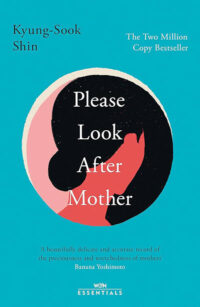
Book review: Please Look After Mother by Shin Kyung-sook
September 16, 2025February 16, 2026

please look after mother book cover

Last year I looked up recommendations of Korean literature available in translation. Not so long ago, the options were fairly few but that’s changing fast. I have multiple novels by Kyung-sook Chin on my want-to-read list and I’m happy to find I really enjoyed the first one I tried, Please Look After Mother (translated from Korean by Kim Chi-young).

The premise is simple. But the psychology and emotions are far from simple. An elderly woman, Park So-nyo, is separated from her husband in the busy crowds at a central Seoul subway station. The novel follows her family’s search for her and their gradual discoveries about this woman they thought they knew.

Chapters are told from the perspective of different members of the family in turn. Some sections are written in second person, which I don’t always get on with. And it did put me off a little to begin with, but Chin won me over.

Continue reading “Book review: Please Look After Mother by Shin Kyung-sook”

Kate Gardner Reviews

Book review: This House by Sian Northey

January 24, 2025 1 Comment

This House book coverSeeing as I chose it as one of my top five books of last year, you already know I loved This House by Sian Northey, translated from Welsh by Susan Walton. It’s a gentle, quiet novel about old age, grief, friendship and home.
We meet Anna arriving home from hospital on crutches, hobbling around the remote house called Nant yr Aur, where she lives alone. But she doesn’t have to cope entirely on her own. Soon we meet her friend Emyr, who drops in on her most days. He’s a farmer and her only neighbour within walking distance. They’re both getting old and though Emyr has a wife and two grown sons at home, he clearly values Anna’s friendship.

Between Emyr’s visits, Anna reflects back on her life in the house, prompted by a letter she’s received from someone offering to buy it. This isn’t the first offer she’s had, and she doesn’t plan to accept, but it’s made her reminisce. We learn she had a partner once, Ioan; in fact, the house was his, but she was the one who fell in love with it. When Anna decides to meet Sîon, the young man who’s made the offer, they strike up an unlikely friendship.

Continue reading “Book review: This House by Sian Northey”

Kate Gardner Reviews

Quivering, like jelly, quivering like a small bird

April 20, 2020

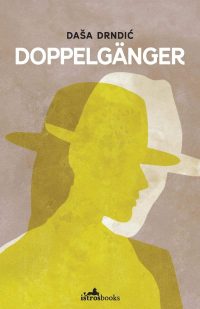
DoppelgangerDoppelgänger
by Daša Drndić
translated from Croatian by SD Curtis and Celia Hawkesworth

This was my Croatia choice for the EU Reading Challenge. It’s a novella formed of two stories linked by major themes and minor details. There were nice moments but overall I didn’t love this.

In the first story “Artur and Isabella” the eponymous heroes are old and think their days of romance are behind them, until they meet. Drndić doesn’t skimp on the grotesque aspects of ageing, to the point of making me quite uncomfortable. The third person narrative alternates with brief police reports on the two lead characters, the reason for which becomes clear at the end. There’s also a tendency to include lists, which in a longer story can provide nice change of pace, but in something so short it was disruptive. I’m pretty sure this is meant to be a sad tale but I wasn’t at all emotionally involved.

Continue reading “Quivering, like jelly, quivering like a small bird”

Kate Gardner Reviews

A single sentence could render either of us insane

July 20, 2017 2 Comments

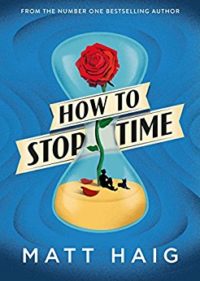
How to Stop Time
by Matt Haig

I love Matt Haig’s Reasons to Stay Alive and his essays on mental health, plus he gives good Twitter, but I had put off reading his fiction. Why did I do that? Of course I was going to like it.

The narrator of How to Stop Time, Tom Hazard, was born in 16th century France. Now, in the 21st century, he’s working as a history teacher at a London comprehensive school. He’s not a time traveller, he has a medical condition that makes him age really really slowly. So slowly that he still looks to be in his 40s, not his 400s.

It’s science fiction that wears the science lightly but doesn’t avoid it. An explanation is given, and some details added, but the bulk of the story is about the emotional effect of the condition.

“Forever, Emily Dickinson said, is composed of nows. But how do you inhabit the now you are in? How do you stop the ghosts of all the other nows from getting in? How, in short, do you live?”

Continue reading “A single sentence could render either of us insane”

Kate Gardner Reviews

Instability is a permanent condition that adapts with the times

January 15, 2014February 9, 2020

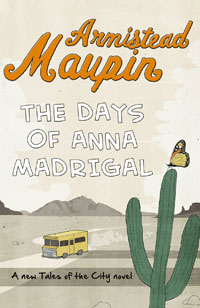
The Days of Anna Madrigal

The Days of Anna Madrigal
by Armistead Maupin

I thought quite hard about what should be my first book of the new year and this felt like a really good choice. I was really excited to be sent a copy of this, the latest Tales of the City novel, having loved the first book in the series. And this ninth instalment is just as funny, touching, well observed and eye-opening as that first one was for me. Those who haven’t read the whole series might find spoilers in this review.

Anna Madrigal was the eccentric but beloved landlady of the legendary 28 Barbary Lane. Now she is very old and, feeling that her time is near, takes a trip to her childhood home in Nevada, hoping to come to peace with the actions of the boy she once was. At the same time, several of her dearest friends are heading for the annual Burning Man festival, also in Nevada, and they have their own gremlins to deal with. Will Shawna take the biggest step of her life and become a mother? Will Michael find peace with his younger, hipper husband? Will Jake’s painstaking plan to honour Anna come to fruition or fall apart in the desert dust?

“‘Chillax? You don’t say chillax.’
‘I’m saying it now. Because you’re acting like you’re twelve and hormonal.’
If only he knew, thought Michael. Sixty-two was a lot like twelve and hormonal. Teenagers rage against the end of childhood, old people against the end of everything. Instability is a permanent condition that adapts with the times.”

This book was, perhaps inevitably, a little more serious than the start of the series was. It’s certainly not without humour, or lighter moments, but the overarching themes include ageing, death and betrayal, and when the death that’s most imminent is that of a character who has been beloved through eight previous books over 35 years, well, you can’t be flippant about it.

There are also more positive themes such as renewal and acceptance. Which all sounds remarkably worthy, and that’s one thing this book isn’t. It’s touching, moving even, but never overly sentimental. In fact, I found Anna just as hard to get inside the head of as ever. But then the other characters have the same problem with her so I guess that’s just how she is.

“Summer had been warmer than usual this year, but the heat that throbbed in the East Bay was already coaxing pale fingers of fog into the city. Anna could feel this on her skin, the chilly caress she had come to think of as ‘candle weather’.”

There’s quite a broad cast of characters here, most of whom (though not all) are LGBT, and I like how the sheer number of people he’s created allows Maupin to not stereotype or pigeonhole any one character. They are all human and interesting. They have realistically complicated relationships with one another, which I know is partly a result of having several previous books about most of these people. But it’s also an accurate reflection of how the world is. Couples break up and move on but often still have mutual friends. Sometimes if you examine how you met your best friend you realise that to begin with they were your ex-boyfriend’s boss’s landlady, and you’re no longer in touch with your ex but that tenuous connection became the most important friendship of your life.

It’s hard to write much more about this book without giving away the events in it, but I really did find it charming and enjoyable, and I am glad to have been reminded to go back to this wonderful series.

Published January 2014 by Doubleday, an imprint of Transworld.

Source: This book was kindly sent to me by the publisher in return for an honest review.

Kate Gardner Reviews

Man is many things, but he is not rational

January 15, 2013January 23, 2013 2 Comments

The Picture of Dorian Gray
by Oscar Wilde

I have had this sat on my shelves for ages because, even though I’ve watched and loved a few of Wilde’s plays and have fond memories of his children’s stories, something in me said this is old and “classic”, therefore it will be hard. It was not a hard read at all, it was a thoroughly enjoyable one.

I would say that everyone already knows the storyline, but I was surprised to discover how vague my understanding of it was before I started reading. So I will summarise. At the start of the novel, Dorian Gray is young, beautiful, charming and innocent, and is serving as a muse to painter Basil Hallward, who is a little obsessed with him and has just painted his masterpiece, a portrait of Dorian. Dorian remarks that he wishes the painting might grow old while he stays young and beautiful and…well, it happens, but more slowly and darkly than I had expected.

“Hour by hour, and week by week, the thing upon the canvas was growing old…The cheeks would become hollow or flaccid. Yellow crow’s feet would creep round the fading eyes and make them horrible. The hair would lose its brightness, the mouth would gape or droop, would be foolish or gross, as the mouths of old men are. There would be the wrinkled throat, the cold, blue-veined hands, the twisted body.”

Dorian, when he realises what is happening, slowly becomes quite bad. Is this the influence of life in general? The circumstance of being able to look fresh and beautiful no matter how guilty he feels? Is it how Dorian’s nature was always fated to develop? Or is it all the influence of Lord Henry Wotton, a friend he was introduced to by Basil on that fateful day when the portrait was finished? Lord Henry is a fun character, talking largely in aphorisms and painting himself as morally repugnant, but the key seems to be that he doesn’t mean half of what he says, whereas Dorian takes it all to heart.

” ‘I adore simple pleasures,’ said Lord Henry. ‘They are the last refuge of the complex. But I don’t like scenes, except on the stage…I wonder who it was defined man as a rational animal. It was the most premature definition ever given. Man is many things, but he is not rational. I am glad he is not, after all.’ “

This book is so very quotable. Even skipping the slightly trite aphoristic preface (which I have seen quoted from many times), the language is full of both delightfully Wildean phrases but also exquisite descriptions:

“There was a silence. The evening darkened in the room. Noiselessly, and with silver feet, the shadows crept in from the garden. The colours faded wearily out of things.”

The characters are interesting. I didn’t feel I ever got to know any of them well, but they are certainly varied and in some cases fascinatingly complex. Even those characters that might have been verging on caricature are described so well it hardly matters.

“The exaggerated folly of the threat, the passionate gesture that accompanied it, the mad melodramatic words, made life seem more vivid to her. She was familiar with the atmosphere. She breathed more freely, and…would have liked to have continued the scene on the same emotional scale, but he cut her short. Trunks had to be carried down, and mufflers looked for. The lodging house drudge bustled in and out. There was the bargaining with the cabman. The moment was lost in vulgar details.”

Nothing is straightforward and not all of the mysteries of the story are resolved. Which was sometimes frustrating – exactly what are the rumours circulating about Dorian? I can imagine, but I want to know! I suppose that’s one of the moments to remember that this was written in the 19th century – it rarely if ever feels that old.

First published in the July 1890 issue of Lippincott’s Monthly Magazine. Revised and published as a book in 1891 by Ward, Lock and Company.

Source: I have a chunky Complete Works of Oscar Wilde that I have owned for more than 10 years. I think I bought it for myself. Probably.

Challenges: This counts towards the Rory Gilmore Reading Challenge.

Kate Gardner Reviews

He doesn’t have the sense of a billy goat

December 14, 2012December 14, 2012

Fried Green Tomatoes at the Whistle Stop Cafe
by Fannie Flagg

This was a book club pick and I thought somehow that it would be light and fluffy and girly, possibly because that’s how I remember the film (though on rewatching the film this week I discovered it’s not really those things either). It’s certainly an easy, enjoyable read, but it covers a lot of issues without labouring the point and has some very interesting things to say.

In the 1980s middle-aged Alabama housewife Evelyn Couch is visiting a nursing home and gets talking to a resident there, Mrs Ninny Threadgoode. Ninny is old and a little forgetful but also charming and immediately launches into stories about her early life in a small town called Whistle Stop. At the heart of these stories are Idgie and Ruth, the two women who ran the Whistle Stop Cafe from 1929 until it closed. However, inbetween there are snippets about other characters from the town and their lives, all told with a wonderful sense of humour.

“This skinny little man, so black he was a deep royal blue, had caused a lot of trouble for the opposite sex. One gal drank a can of floor wax and topped it off with a cup of Clorox, trying to separate herself from the same world he was in. When she survived, claiming that the liquids had ruined her complexion for life, he became continually uneasy after dark, because she had snuck up behind him more than once and cracked him in the head with a purseful of rocks.”

And at that level it all sounds a bit twee. But this book covers racist violence, domestic abuse, homosexuality, prostitution, extreme poverty and death, which is some pretty dark stuff for a story that’s so nice and chirpy on the surface. I know some at book group felt that this meant none of the themes were really explored, but were just thrown in there, and certainly the only subjects really talked about are female empowerment and death.

But then one of the running themes in this book is not talking about important things. Idgie and Ruth are a couple, which you would think was a big no-no in a small southern US town in the 1930s, but the whole town seems to know and just accept the situation. I wondered if this was because they all consider Idgie an honorary man. She certainly not only joins in with but often takes lead in hunting, fishing, gambling, drinking and the other manly pursuits of the town. But she’s far from being the only strong woman in town.

“Cleo, Idgie’s brother, was concerned…
‘Idgie, I’m telling you, you don’t need to feed every [hobo] that shows up at your door. You’ve got a business to run here. Julian…says he thinks you’d let Ruth and the baby go without to feed those bums.’
…’What does Julian know? He’d starve to death himself if Opal didn’t have the beauty shop. What are you listening to him for? He doesn’t have the sense of a billy goat.’
Cleo couldn’t disagree with her on that point.”

Each chapter takes a different source or viewpoint, so there’s Evelyn’s daily life, Ninny’s reminiscences, the Whistle Stop newsletter and other newspaper articles, and occasionally a plain old omniscient narrator. There’s also lots of jumping back and forth in time, which was confusing at first because there seemed to be sections that were unrelated, but by the end it all ties together. And also, in the end there is no single character who knows everything that the reader does, which I quite liked.

Generally, I found what could have been a heavy-handed moral tale a much more subtle look at life in the southern US. The one unsubtle message was about strong women. Really, it’s Evelyn’s story, and she is discovering through Ninny’s stories how unhappy she is with her life, downtrodden and ignored by her husband.

“After the boy at the supermarket had called her those names, Evelyn Couch had felt violated. Raped by words. Stripped of everything. She had…always been terrified of displeasing men…She had spent her life tiptoeing around them like someone lifting her skirt stepping through a cow pasture.”

As someone at book club pointed out, at the novel’s heart is the power of storytelling. Ninny’s stories have to be good for us to believe they would have such a profound effect on Evelyn. And it is all a rollicking good yarn, with a running theme of tall tales.

I seem to be saying this of every other book at the moment, but I think I would get a lot out of re-reading this.

First published 1987 by Random House.

Kate Gardner Reviews

Archives

RSS Nose in a book

  • Book review: Interstellar Megachef by Lavanya Lakshminarayan
  • May 2026 reading round-up
  • Book review: Passing by Nella Larsen

Me on the internets

  • @kate_in_a_book@mas.to (Mastodon)
  • Flickr/noseinabook
  • Instagram/kate_in_a_book
  • StoryGraph/kate_in_a_book

Categories

  • Blog
  • Reviews
  • Uncategorized
Proudly powered by WordPress | Theme: Dream by vsFish.