Nose in a book

Reviews and other ramblings

  • Home
  • Reviews archive
    • Book reviews
    • TV reviews
    • Theatre reviews
  • TBR
  • Challenges
    • The Classics Club
    • 2014 Popular-Science Reading Challenge
    • Cookery challenge
    • The Gilmore Girls Reading Challenge
    • 2013 TBR Pile Challenge
    • 2013 Translation Challenge
    • Crime and Punishment read-a-long
  • About
    • Cookie legal stuff
  • Home
  • Reviews archive
    • Book reviews
    • TV reviews
    • Theatre reviews
  • TBR
  • Challenges
    • The Classics Club
    • 2014 Popular-Science Reading Challenge
    • Cookery challenge
    • The Gilmore Girls Reading Challenge
    • 2013 TBR Pile Challenge
    • 2013 Translation Challenge
    • Crime and Punishment read-a-long
  • About
    • Cookie legal stuff

Tag: magic

Book review: We Have Always Lived in the Castle by Shirley Jackson
March 16, 2026

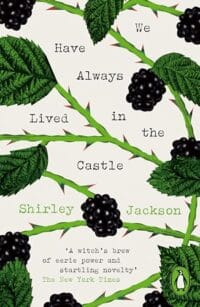
We Have Always Lived in the Castle book cover

I have a new book club and our first read was We Have Always Lived in the Castle by Shirley Jackson, which it turns out is excellent book club fodder.

This is a classic for a reason – a deliciously creepy southern gothic tale packed full of mystery. First published in 1962, it feels like it could be set much earlier – until the occasional car reminds us it must be the 20th century.

Mary Katherine (Merricat) Blackwood and her older sister Constance live in a big house on the outskirts of a village with their very ill uncle Julian. Outcasts and subjects of gossip since the rest of their family died six years earlier, their lives are shrinking and filled with superstition. Yet they are, in a way, happy.

Continue reading “Book review: We Have Always Lived in the Castle by Shirley Jackson”
Kate Gardner Reviews

Book review: Wicked by Gregory Maguire

March 21, 2025 1 Comment

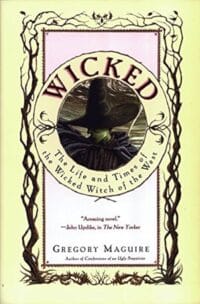
Wicked book coverAs if to prove his point in his author’s introduction, the first few chapters of Wicked: the Life and Times of the Wicked Witch of the West by Gregory Maguire include: slut shaming; puppet porn; mob violence and a pretty detailed childbirth. This book is very much not for children. It is so much better, darker and more politically complex than I had expected from having seen the musical years ago on the West End.

This is not a sweet and light tale of female friendship regretfully torn apart by loving the same man. It’s a politically complex novel about the spread of right-wing ideology and one woman who finds that not playing along with the majority opinion comes at a high cost. Put another way, it’s Elphaba’s story, from birth to death.

Oz is a land slowly falling to a dictator – the Wizard – who is sowing hate and discord to divide and conquer the four previously autonomous regions around Emerald City. Elphaba is the daughter of a preacher and a woman who is already unhappy before her first child is born with green skin. Everyone fears her, child and adult.

Continue reading “Book review: Wicked by Gregory Maguire”

Kate Gardner Reviews

That faraway summer when he discovered magic

January 30, 2020February 4, 2020

Prince of MistThe Prince of Mist
by Carlos Ruiz Zafón
translated by Lucia Graves

This was my Spain choice for my EU Reading Challenge, which I am clearly not going to finish before the UK leaves the EU, but maybe I’ll manage it before the end of the year. I guess it’s appropriate for this month that I didn’t really enjoy this book.

This is a YA mystery by the author of The Shadow of the Wind, which I loved. It’s not the first of his YA books that I’ve read, but this was definitely inferior to The Watcher in the Shadows. This may be related to the author’s note that opens the book, which says that this was Zafón’s first published novel.

It starts strong. It’s 1943 and the Carver family decide it will be safer to leave the city for a sleepy seaside town that is less likely to be bombed. The three children Alicia, Max and Irina are unimpressed by the move and hope it’s just for the summer. Their new house is described in classic Zafón style as a creepy wooden house with a sad history. Then the weird stuff starts, beginning with a stray cat.

Continue reading “That faraway summer when he discovered magic”

Kate Gardner Reviews

Having no idea what to do next left her traitorous mind free to ruminate

July 7, 2017July 15, 2017

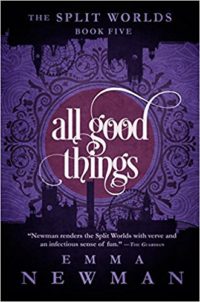
All Good Things
by Emma Newman

Book 5 of Emma Newman’s Split Worlds series came out in June and I bought it pretty promptly, keen to learn the fates of Catherine, Max, Sam and all the other great characters that populate these stories. I’ve been following the series since the start (I went to the Bristol launch of book 1, Between Two Thorns) and thoroughly enjoyed every instalment.

As the title suggests, this is the final part of the series (but is it an end rather than the end?). There are the same great characters and sense of humour, plus some seriously ramped-up action.

At the end of book 4 (WARNING: SPOILERS AHEAD) Cathy has escaped the Nether and is under the protection of Sam, who as Lord Iron is the one person who can keep her safe from the Fae and their magic. But Cathy doesn’t want to rely on anyone else, even the loveable, well-meaning Sam, so she finds a way to make herself stronger. It involves facing a huge decision, one that puts a lot of lives in her hands. Has Cathy bitten off more than she can chew?

Continue reading “Having no idea what to do next left her traitorous mind free to ruminate”

Kate Gardner Reviews

The delicacy and insight of a cat with its head stuck in a box

June 8, 2017June 8, 2017

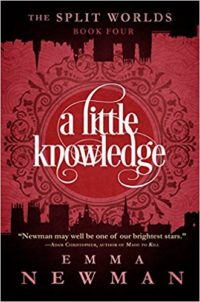
A Little Knowledge
by Emma Newman

This is the fourth book in the Split Worlds, a fantasy series that Newman started in 2013 with Between Two Thorns. This review may contain spoilers for the previous three books.

The story still centres on Cathy – one of the “fae-touched” humans, whose life is controlled by the Fae – and Max, whose job is to protect innocent humans from magical misdeeds, such as being disappeared. Cathy must now live in the Nether, a magical reflection of the human world, known as Mundanus. Though she theoretically inhabits a powerful position in fae-touched society, she is frustrated by the confines of an extremely patriarchal system. Her experience in Mundanus exposed her to feminism and women’s rights – thoroughly foreign concepts in the Nether. But the resistance to her proposed changes is so extreme that she wonders if something else is going on.

“It didn’t help that at social events she just wanted to sneak off and read a book, like she had as a child. Although Cathy understood that wasn’t possible anymore, it was too much of a leap to suddenly acquire all the social delicacy and insight now required of her. Cathy had the delicacy and insight of a cat with its head stuck in a box moving backwards to try and escape it, and she knew it.”

Continue reading “The delicacy and insight of a cat with its head stuck in a box”

Kate Gardner Reviews

The existence of the jinn posed problems

December 29, 2015

two-years-eight-months-28-nightsTwo Years Eight Months & Twenty-Eight Nights
by Salman Rushdie

This has everything you might expect in a Rushdie novel: gods, religion, satire, myth, history, sarcasm and wordplay. But it is much more readable than the other novels of his that I have tackled (The Satanic Verses, Midnight’s Children, Shalimar the Clown, The Ground Beneath Her Feet). The tone is lighter, more comic, even though the topics are just as weighty.

The story begins in 12th century Spain, with exiled philosopher Ibn Rushd, also known as Averroes (who existed in real life and is the source of Rushdie’s family name). He falls in love with Dunia, who is secretly a jinnia (female jinn). She bears him dozens of children but he refuses to marry her and leaves her when his exile is lifted.

Skip 800 years and one of the Duniazát, as Rushd and Dunia’s descendents are called, has begun to float. Mr Geronimo is a gardener in New York City, just one of many victims of the “time of strangenesses” – the result of a war between the Jinn leaking into the human world. The normal rules of physics no longer apply.

Continue reading “The existence of the jinn posed problems”

Kate Gardner Reviews

I knew the story would change as I told it

October 2, 2015October 2, 2015

bitter greensBitter Greens
by Kate Forsyth

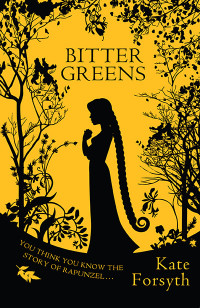
This book has a lot of elements that appealed to me: a dark retelling of Rapunzel, a fictionalised account of the writer of the version of Rapunzel most of us know – Charlotte-Rose de la Force – and the story of a 16th century courtesan in Venice who was muse to the great artist Titian. Plus that absolutely gorgeous cover art. How could I resist?

Did it live up to expectations? Yes and no. About a quarter of the way through, I was a little bored and even considered stopping reading. But from about halfway until the end, I was gripped and thoroughly enjoying the ride. So what was the difference?

The bulk of the start of the book is about Charlotte-Rose, but the interesting bits of her story are saved for later on – and it does get very interesting. The book’s opening tells us that she has been banished from the Versailles court of her cousin Louis XIV and been sent to live in a convent as punishment for her behaviour. There are lots of details of how austere and rule-filled the convent is, and flashbacks to court to reveal how wide the contrast is.

Continue reading “I knew the story would change as I told it”

Kate Gardner Reviews

A story can even raise the dead

March 30, 2015 2 Comments

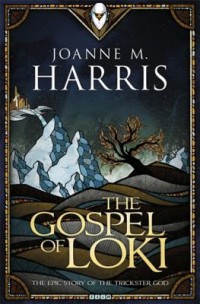
Gospel of LokiThe Gospel of Loki
by Joanne M Harris

I had very high hopes for this book, possibly too high, so that even though I really enjoyed reading it, I somehow feel slightly disappointed. I’m pretty sure I’m being unfairly harsh.

Yes, the Loki of the title is indeed the Loki of Norse myth. This is the story of his time in Asgard, from his recruitment by Odin, the Allfather, to the final battle of Ragnarok. Loki narrates the tale himself, putting his own self-serving spin on events as they unfold. In this accessible, relatable style, Harris successfully brings to life a complex set of myths without the whole thing feeling complicated (although I did have to refer to the handy character list a few times early on).

“Words are what remain when all the deeds have been done. Words can shatter faith; start a war; change the course of history. A story can make your heart beat faster; topple walls; scale mountains – hey, a story can even raise the dead.”

Continue reading “A story can even raise the dead”

Kate Gardner Reviews

Jokes, banalities and metaphors assaulted her sensibilities

January 20, 2015January 19, 2015

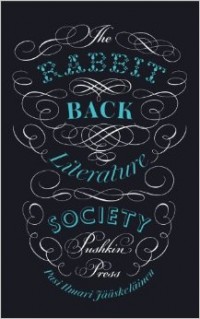
rabbit-back-literature-societyThe Rabbit Back Literature Society
by Pasi Ilmari Jääskeläinen
translated from Finnish by Lola M Rogers

This book was one of the staff recommendations at Mr B’s Reading Emporium and I was attracted to the title and the sinister tone of the blurb. I waited until it was suitably wintry outside (it is set in Finland, after all) and then settled in for something magical.

Ella Milana has recently moved back to her home town of Rabbit Back to teach literature and help her mother cope with Ella’s father’s decline into dementia. Rabbit Back is renowned throughout Finland, indeed the world, for being the home of acclaimed children’s author Laura White, who is not only a beloved bestseller herself, but also declared that she could take ten children from her home town and turn them into successful writers as well. To this end she formed the Rabbit Back Literature Society, to which she invited nine children who have grown up to become great writers. As Ella is both an adult and not a regular writer (she dabbles), she is rather taken aback to be chosen as the society’s tenth member.

“The essays blared through her consciousness…Jokes, banalities and metaphors assaulted her sensibilities, and the floodgates of language standards creaked as dubious sentence structures and hyphenation errors dribbled through their cracks. Every imperfect essay left a dent in Ella’s mind.”

This passport to greatness appears to have been curtailed as soon as it began when at a dinner party thrown at Laura White’s house, a key person disappears in a cloud of snow. But Ella is still a member of this writers’ society and she is determined to dig up all its secrets, big and small, real and imagined. Why are words changing in library books? Why is society member sci-fi writer Arne C Ahlqvist (real name Aura Jokinen) creeping around Ella’s house at night? And was there a previous tenth member of the society who has been written out of its history?

I love that when the first few strange things happen, including Ella’s invite to the society, she is too busy with her normal life to pay it all much heed. She has a job, difficult parents, her own preoccupations. This really highlighted for me how often in books characters jump to something new in their life with no regard for what they would otherwise have been doing.

“He just wanted to look at the garden, to watch it grow – that’s how he explained it to his wife, Marjatta, who had begun to think of herself as a widow and sometimes suffered from a terrible feeling of guilt because of it. Old age doesn’t always wait till you’re old, was her way of answering him. Every day seemed to break off another little piece of Paavo Emil Milana’s personality, and piece by piece he was less and less the Paavo Emil Milana she had married.”

The story hints at and creeps into several genres. The overall structure is that of the detective novel, but it’s not clear whether any crime has been committed. Similarly, there are strange hints of the supernatural in various forms – ghosts, faerie creatures, magic – but nothing is definite, nothing is explained. Could it all just be over-fired imaginations?

The imagination is certainly central to everything else in this novel. White has trained her writers to tap into their and each other’s deepest, most buried thoughts to fuel their writing. The whole town seems to believe in magical creatures, in dark shapes in the shadows become manifest. Even the dogs are behaving strangely. But there is also the beautiful possibility of imagination, the joy that books (and other writing – one of the society members writes for TV and another for film) bring.

“ ‘It was a lovely collapse,’ Saaristo said. ‘Like something out of an old melodrama. All that was missing were the smelling salts. It’s no wonder you fainted in this crowd. Free coffee and cake will get the masses out better than resurrection day.’ She looked around, smiled broadly, and said, ‘But if you want to find characters for a book, this is a good place to do it, as I’m sure you’ve noticed. I found bits of a serial killer’s mother, half of a hero’s lover, and three whole peripheral characters today. A nice haul.’ ”

As Ella learns the rituals of the secretive society and unearths its and the town’s secrets, there is always the potential for something awful to come to light, but what is hidden is more often sad in an everyday way, or at least everyday for the world – loneliness, infertility, the death of parents, the love affair that ended.

And yet somehow it isn’t a sad book, this tinge of sorrow underlines but doesn’t overwhelm the magical otherness, the sense of fun and adventure, the intrigue of mystery. There’s a black humour, a nod to the idea of the idyllic-seeming town harbouring dark secrets, but it’s so much stranger than that.

Lumikko ja yhdeksän muuta first published 2006 by Atena Kustannus.

This translation published 2013 by Pushkin Press.

Source: Mr B’s Reading Emporium.

Kate Gardner Reviews

Mid-winter reading round-up

January 11, 2015 4 Comments

Hands up: I finished reading two of these books weeks ago and have therefore forgotten almost everything about them. They all deserve full reviews but I’d have to reread the books for that to happen and, let’s face it, that’s not happening. So here are some woefully brief thoughts on the last few books that I’ve read. (Incidentally, my 2015 reading has started slowly. Goodreads tells me I am already behind. Stupid reading challenges.)

Dear LifeDear Life
by Alice Munro

Munro writes beautiful short stories about everyday life in Canada, often set in or starting from the mid-20th century, and even the more modern settings have a timeless quality to them. There was a bit of a theme of passing through, of the people who are important to you for a while and then move on, which is not an easy theme to create satisfying endings from, but this never bothered me. I really liked the story “Amundsen”, about a woman who goes to a remote village to teach at a school that’s part of a tuberculosis sanatorium. It’s somehow very ordinary and very strange at the same time.

“The building, the trees, the lake, could never again be the same to me as they were on that first day, when I was caught by their mystery and authority. On that day I had believed myself invisible. Now it seemed as if that was never true.”

First published in Great Britain 2012 by Chatto & Windus.

Source: Foyles, Bristol.

The Dead Lake
by Hamid Ismailov
translated from Russian by Andrew Bromfield

This strange short book started out with so much eerie promise but it got a little boring in middle. In fact, I put it down for a month and wasn’t sure if I would pick it up again, but I’m glad that I did. The language is beautiful and the story almost a fairy tale. It’s about Yerzhan who lives in a remote part of Kazakhstan where the Soviets test atomic weapons. As a young boy he fell in love with the girl next door and one day, to impress her, he dived into a forbidden (and almost certainly radioactive) lake. The consequences of this action are odd and fantastical, which is fitting for such an empty, unsettling landscape.

“Yerzhan stood there with his heart pumping hard, pounding its rhythm against the wall – or was that the heavy passenger express that pounded on the rails with a rhythm that pulsed through the ground? Whatever the cause of the pounding, Yerzhan just stood there nailed to the floor, more dead than alive. And once again that same implacable, visceral fear rose up from his trembling knees to his stomach, where it stopped like a hot, heavy, aching lump.”

Published 2014 by Peirene Press.

Source: Peirene gave this away as a free e-book to newsletter subscribers.

Rivers of London
by Ben Aaronovitch

This had been recommended to me by basically everyone and we accidentally ended up with two copies of it, so I’ve been meaning to read it for a while. It’s the story of Peter Grant, constable for the Met, who at the start of the book is at the end of his probation, waiting to be assigned to a department, so his whole career could hinge on how he handles guarding a crime scene in Covent Garden. Which would be easier if this particular murder case didn’t appear to involve ghosts and all manner of strangeness. This book is a lot of fun. It explores fantasy, magic, policing, class, race, history and death, doing so with great humour and plenty of action. There are already four sequels, which I know people rave about as much as this first book.

“Rush hour was almost in full flood when I got on the train, and the carriage was crowded just short of the transition between the willing suspension of personal space and packed in like sardines…I was sending out mixed signals, the suit and reassuring countenance of my face going one way, the fact that I’d obviously been in a fight recently and was mixed race going the other. It’s a myth that Londoners are oblivious to one another on the tube: we’re hyper-aware of each other and are constantly revising our what-if scenarios and counter strategies.”

Published 2011 by Gollancz.

Source: Heffers Bookshop, Cambridge.

Kate Gardner Reviews

Posts pagination

1 2

Archives

RSS Nose in a book

  • Book review: Interstellar Megachef by Lavanya Lakshminarayan
  • May 2026 reading round-up
  • Book review: Passing by Nella Larsen

Me on the internets

  • @kate_in_a_book@mas.to (Mastodon)
  • Flickr/noseinabook
  • Instagram/kate_in_a_book
  • StoryGraph/kate_in_a_book

Categories

  • Blog
  • Reviews
  • Uncategorized
Proudly powered by WordPress | Theme: Dream by vsFish.