Nose in a book

Reviews and other ramblings

  • Home
  • Reviews archive
    • Book reviews
    • TV reviews
    • Theatre reviews
  • TBR
  • Challenges
    • The Classics Club
    • 2014 Popular-Science Reading Challenge
    • Cookery challenge
    • The Gilmore Girls Reading Challenge
    • 2013 TBR Pile Challenge
    • 2013 Translation Challenge
    • Crime and Punishment read-a-long
  • About
    • Cookie legal stuff
  • Home
  • Reviews archive
    • Book reviews
    • TV reviews
    • Theatre reviews
  • TBR
  • Challenges
    • The Classics Club
    • 2014 Popular-Science Reading Challenge
    • Cookery challenge
    • The Gilmore Girls Reading Challenge
    • 2013 TBR Pile Challenge
    • 2013 Translation Challenge
    • Crime and Punishment read-a-long
  • About
    • Cookie legal stuff

Tag: Paris

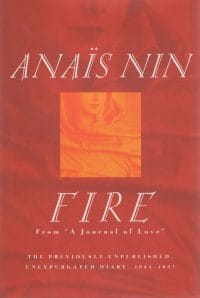
Book review: Fire: the Unexpurgated Diaries 1934–1937 by Anaïs Nin
December 19, 2021March 11, 2022

Fire by Anais NinI spent six months reading Fire: the Unexpurgated Diaries 1934–1937 by Anaïs Nin, which is just one volume of Nin’s massive collection of diaries. I kept the chunky tome on my bedside table, reading a few pages at a time. It took me a while (clearly) to get into the flow of it and I am still torn as to whether I want to hunt down the several other books that would complete the story.

This is not volume one (it’s books 48–52 of the hundreds of handwritten diaries Nin left behind). It’s not even the first part of the most famous trilogy of Nin’s diaries, known as A Journal of Love. But a loose note in the front of my smart hardback copy confirms that I ordered this from a secondhand book dealer in 2011, so I clearly wanted this specific volume and can only speculate that I had read a recommendation somewhere. I had read a few collections of Nin’s short stories and one of her novels, so I knew that I liked her writing. And her life is certainly a fascinating one to me.

Nin wrote diaries from a young age and edited her adult diaries for print during her own lifetime. Initially published from 1966 onwards, the first public versions of these books were cut heavily, removing all mention of her husband Hugh Guiler and several other of her more prominent lovers; changing names and details of other characters in her life. After the deaths of both Guiler and Nin, her long-term partner Rupert Pole took on the mammoth task of editing a new set of “unexpurgated” diaries, restoring those deleted details. His preface states “nothing of importance has been deleted”.

Obviously, this being Nin, this book is very sexually explicit (though I suspect that’s not what was cut first time round). It’s also probably worth knowing before you read this that she struggles with depression at times. Her mood swings wildly, and she acknowledges this. She is also unpredictable beyond her state of mental health. At times Nin will do everything she can to keep everyone she loves happy, pushing herself so hard it seems inevitable she will snap. But at other times she seems wilfully cold and cruel, refusing to acknowledge how her actions must affect her beloveds.

Continue reading “Book review: Fire: the Unexpurgated Diaries 1934–1937 by Anaïs Nin”

Kate Gardner Reviews

Theatre review: Amélie the Musical

July 24, 2019 1 Comment

Watermill Theatre Company
Bristol Old Vic, 20 July 2019

Amelie: the musical photo by pamela-raith-photography
Courtesy: Pamela Raith Photography

I first watched the film Amélie (or Le Fabuleux Destin d’Amélie Poulain) fairly soon after it became available to rent in the UK – I think it was late-2002. I later bought the DVD and for a few years watched it often. I loved it, and its star Audrey Tautou, and its whimsical take on love and the responsibility we have to live our lives. And then I largely forgot about it.

Fast forward to this year when a friend invited me to see Amélie: the Musical. I knew nothing about this play’s Broadway background or how it would be staged, but I was pretty sure I wanted to see it. And I’m so glad I did.

This production is a joy from start to finish. The set is spectacular, the songs are beautiful (think Once but more upbeat), every member of the cast is an outstanding musician, and it all perfectly captures the tone and feel of the film without being an exact replica of the story.

Continue reading “Theatre review: Amélie the Musical”

Kate Gardner Reviews

Now he had a decanted version of his thoughts, organised by gravity

June 15, 2019June 16, 2019

The chalk circle man book coverThe Chalk Circle Man
by Fred Vargas
translated from French by Siân Reynolds

This is my France selection for the EU Reading Challenge. It’s a detective novel set in Paris that was recommended years ago on The Readers podcast (RIP). I do tend to prefer crime novels written by women (Fred is short for Frédérique in Vargas’ case) and I think that crime/detective fiction is often especially strong on setting/sense of place. I’m grateful for the recommendation, even if it has taken me a long time to follow up on it.

This is the first in a series of novels following Commissaire Jean-Baptiste Adamsberg. He is already an established, successful public figure thanks to solving some big, media-friendly cases in the Pyrenees. New to Paris and the 5th arrondissement, he is not trying particularly hard to fit into his new team. He’s quiet, contemplative, often seeming to ignore his colleagues. He doesn’t seem to be the right temperament at all for detective work.

Adamsberg trusts his intuition more than seems advisable for someone in charge of major crime investigations, and he talks a lot about trusting these gut feelings and not logic. But I think this is to some extent a mask, as he is in fact extremely observant and has an excellent memory. He also has a high tolerance for other people’s quirks, for example quickly adapting to the discovery that his second-in-command, Danglard, is an alcoholic who is only just managing to hold it together as a single father to five children. He sees through the alcoholism to Danglard’s intelligence and abilities, and judges when to stay Danglard’s hand and when to let him drink.

Continue reading “Now he had a decanted version of his thoughts, organised by gravity”

Kate Gardner Reviews

Computing the amount of precious time that had been lost to him for ever

April 28, 2019April 28, 2019

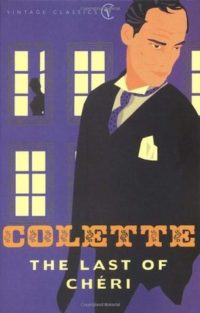
Last of Cheri book coverThe Last of Chéri
by Colette
translated from French by Roger Senhouse

Ah, Chéri, the spoiled beautiful boy who thought he was being terribly grown up by getting married to the first girl he liked who was his own age. Thankfully Colette revisited that scenario and reassured us that no, Chéri is not happy living a respectable life.

Since his introduction in Chéri, Chéri has fought in the First World War and returned to a Paris changed irrevocably. His wife has found purpose running a hospital for war veterans, which holds zero interest for Chéri. There is no longer a glittering whirl of parties to occupy his time. He’s depressed, but he doesn’t understand that.

“The apparition of the large, flat, half-veiled moon among the scuppering vaporous clouds, which she seemed to be pursuing and tearing asunder, did not divert him from working out an arithmetical fantasy: he was computing – in years, months, hours and days – the amount of precious time that had been lost to him for ever.”

Continue reading “Computing the amount of precious time that had been lost to him for ever”

Kate Gardner Reviews

Recent reads round-up

October 8, 2016October 8, 2016

I read a few good books in a row and then went on holiday before writing reviews or even notes on them and now it’s two weeks since I finished the last of them. Oops. So here is my attempt to remember what I enjoyed about them. They’re all great!

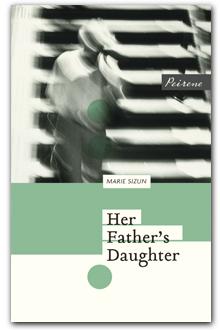
her_fathers_daughterHer Father’s Daughter
by Marie Sizun
translated from French by Adriana Hunter

I loved this book. It is simple and sparse and yet utterly moving. This seems to be a pattern with Peirene books, one that I approve of. The story is told from the perspective of “the child” (she does have a name but it’s rarely used) – a young girl living in Paris during the Second World War. She is the apple of her mother’s eye and despite the Nazi occupation is utterly happy in her little world. Then the father she has never met comes home from the POW camp and the fight for affection begins.

Sizun brilliantly depicts the changing relationships – between mother and child; between father and child; between mother and father; between grandmother and child – against a backdrop of the occupation of Paris ending, and then the war itself ending. Though the child is not the narrator, her perspective filters the story to its essential parts. This at times almost reads like poetry, it’s so distilled. But it isn’t at all abstract in the way that poetry can be. A beautiful, quick read.

Continue reading “Recent reads round-up”

Kate Gardner Reviews

There were no slow degrees of consciousness

November 10, 2015November 10, 2015

books baguettes bedbugsBooks, Baguettes and Bedbugs
by Jeremy Mercer

I’ve seen this book recommended by lots of people over the years, but I must admit, all I knew about it was that it’s about the Shakespeare and Company bookshop in Paris, a tourist attraction I’ve never visited, and knew of only as a famous bookshop associated with some famous authors and artists. So I learned a lot, and completely fell in love with the shop and its story.

I’ve been to Paris twice, and travelled through it another two or three times, and it’s a little crazy that a famous English-language bookshop near the city centre wasn’t on my list of attractions to visit. It certainly will be next time, though it won’t be quite the same shop that Mercer describes.

First, I learned that the current incarnation of the bookshop, on Rue de la Bûcherie, is not the same as the first bookshop by that name, which was opened and run by Sylvia Beach from 1919 until 1940. That shop had its own wonderful history with colourful characters who have popped up in various things I’ve read, but Mercer for the most part skips past all that to the second Shakespeare and Company bookshop, which was opened in 1951 by George Whitman. He originally called his shop Le Mistral, but changed it in 1964 to Shakespeare and Company in tribute to Sylvia Beach, following her death.

Continue reading “There were no slow degrees of consciousness”

Kate Gardner Reviews

The poem is an extraordinary mechanism

June 3, 2015May 20, 2015

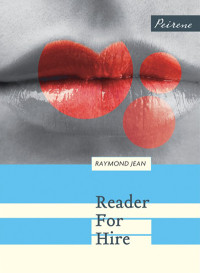
reader for hireReader for Hire
by Raymond Jean
translated from French by Adriana Hunter

This is an unusual book, difficult to pin down. It’s comedic bordering on farce, it’s sensual to the point of erotica, it’s intellectual veering dangerously close to literary criticism. All of which can be ignored if you just want a good story to enjoy, but you will need an open mind for this one.

It was her friend Françoise’s idea, but Marie-Constance quickly finds herself having to fight for it. She places an ad in the local paper offering her services as a reader, because her voice is her greatest asset. The newspaper man thinks the advert sounds suspicious. Her old university tutor thinks she will attract the wrong sort. Her husband alone is indifferent.

Marie-Constance’s first client is a paraplegic teenager who initially seems more interested in the length of her skirt than the classic short story she has chosen to read him, a choice that ends in near disaster. Her second client is an elderly woman with cataracts who only wants to read Marx, which bores Marie-Constance to tears. The third is an attractive newly divorced executive who claims he only wants a crash course in literature so that he can appear more cultured. Each new opportunity seems to bring new problems and soon Marie-Constance is on first-name terms with the local police chief.

Continue reading “The poem is an extraordinary mechanism”

Kate Gardner Reviews

Some heavier sensitive reality

March 4, 2015March 25, 2015

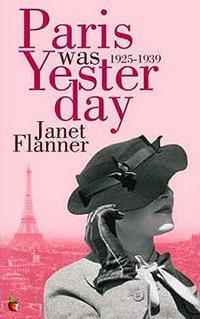
paris was yesterdayParis was Yesterday: 1925–1939
Janet Flanner

I chose this book as my next read for the Classics Club on the back of an article Siân Norris wrote last year on For Books’ Sake about the women of the Left Bank. I’m one more of the many people fascinated by Paris of the early twentieth century but I’m also a feminist, so the idea of finding out more about the women writers and artists of that time greatly appeals to me.

Janet Flanner was an American journalist who moved to Paris in 1922 with her lover, actress Solita Solano. In 1925 she began writing the Letter From Paris column for the New Yorker, under the pen name Genêt. This book is a selection from the first 15 years of those columns. It’s a combination of gossip, reviews, obituaries and day-to-day reporting. It’s an at times uneven mix and I don’t know if that’s an accurate reflection of the column or the way this book has been edited.

The book starts strongly, really making me feel the setting and wish I could have experienced it. Flanner clearly wasted no time in getting to the centre of social life in Paris, recounting a series of breathless parties and still-notable first performances. She was there for the première of the Stravinsky ballet Oedipus Rex, with lyrics by Cocteau and costumes by Picasso – can you imagine?

Continue reading “Some heavier sensitive reality”

Kate Gardner Reviews

Every sort of trouble I can think of, we’ve tried it out

September 16, 2014

Z

Z: a Novel of Zelda Fitzgerald
by Therese Anne Fowler

In case you missed me effusing on Twitter, I loved this book. A lot. I picked it up on a whim in a bookshop, having heard nothing about it and with no idea what to expect. I only knew that I was interested in the subject matter, but of course that was no guarantee. It was a good whim: I was engrossed and tore through it, then regretted having read so fast.

This is a work of fiction, but Fowler did a lot of research, reading diaries, letters, articles and interviews from Zelda and F Scott Fitzgerald and their friends, in order to reach her own interpretation of Zelda’s character. What she came up with was a character I felt I had a lot in common with – I know, I’m not an obvious comparison to the original flapper and embodiment of the jazz age, but such is the skill of a good writer!

The story follows Zelda from the day she first met Scott until her death, and the life they led was pretty exciting and event-filled, so on reflection a lot has been squeezed into these 350 or so pages, but it never felt rushed or crammed at all. Fowler has somehow given Zelda space to reflect and reminisce rather than just telling her story event by event, and by doing this the character comes truly alive.

“Before Scott’s success, before people everywhere had been ravaged by war and flu, there’d been little glamour in the literary world. To be a writer then was to be a drab little mole who thought big thoughts and methodically committed them to paper…With this group, though…and the postwar push for life, for fun, for all the things Scott and I were seeking and embodying, the literary world put its foot into the circle of the entertainment world’s spotlight.”

First of all, this is a story about true love. Although their marriage was far from perfect (in fact, arguably they were destructive for each other), Scott and Zelda were unusual among the circles they moved in, in that they were indisputably the love of each other’s life. This is backed up by the fact that, though this is a book in Zelda’s voice and very clearly on Zelda’s side, so that at times Scott is the bad guy, for the most part he is also a warm, relatable character, albeit one with a long long list of flaws! But then the portrait of Zelda acknowledges her flaws too. Until her health problems slowed her down, her drinking and partying was as out of control as Scott’s. They both struggled psychologically with feelings of inadequacy and failure – though for Scott this alternated with him being convinced he was a genius.

As those who know Zelda’s story will already be aware, it is psychological problems that give her and Scott an air of tragedy. She clearly suffered with mental health issues, but, from this novel at least, it seems that perfectly manageable issues were blown up into huge problems by a combination of stigma, prejudice, misdiagnosis and outdated treatments. Add to this Scott’s alcoholism and the intense jealousy that both felt, and you have a situation that was never going to end well.

“There’s a word for people who move from place to place, never seeming to be able to settle down for long: peripatetic. And there’s a word for people who can’t seem to stay out of trouble—well, there are a lot of words for such types…Every sort of trouble I can think of, we’ve tried it out—become expert at some of it, even, so much so that I’ve come to wonder whether artists in particular seek out hard times the way flowers turn their faces toward the sun.”

But for a while there, Scott and Zelda were on top of the world. They were very young when fame hit – they married when Zelda was 20 and Scott 23, and were hitting the headlines and gossip columns pretty much immediately. Fowler does a good job of showing the glamorous, romantic side of fame and the jazz age while acknowledging that Scott and Zelda were never truly as happy or carefree as they seemed to the outside world. She also acknowledges the very many famous names the Fitzgeralds befriended, without it ever feeling like namedropping.

Certainly, I am pre-disposed to like stories about all those artists in Paris in the 1920s, but that’s actually quite a small part of the overall story. What really gripped me most of all was Zelda’s aspiration to be an artist herself, independent of Scott. She was a writer, painter and ballerina, and dearly wished to fully become one or all of those things, but Scott never properly gave her his support. Time and again he would stop her from doing something she loved either in the name of her health or in the name of being a wife and mother. Admittedly, this is Fowler’s interpretation of the situation, but to me it felt that Zelda was a woman born 50 years too soon. Of course there were women in the 1920s (and long before that) working as writers, artists and dancers, but they had to be willing to completely split from conventionality, and Zelda loved Scott too much to risk losing him by doing something he so thoroughly disproved of.

“Imagine your body is youthful, firm, a pleasure to live inside of—and you’re wise enough already to know that this is fleeting, this body and its condition. It won’t last. None of it will last. And because it won’t, you allow the beautiful person who seeks you out to become as much a part of your day, a part of this place, as the poppies that grow beside the rocky path…You let it happen because all of it is illusory anyway.”

Fowler has done a wonderful job of giving Zelda a lyrical, living voice that transported me in time, place and emotions. Her Zelda is difficult and destructive but also wonderful and alive, so that her story is all the more heartbreaking.

So aside from the clunky and possibly misleading subtitle (is it just me or could that be interpreted as “a novel by Zelda Fitzgerald”?) I loved this book thoroughly and recommend it heartily. Predictably it has made me want to read Zelda’s own fiction and indeed more of Scott’s work too. And it’s made me feel a lot better about finding Hemingway mostly too brash and macho!

Published 2013 by Two Roads, an imprint of Hodder & Stoughton.

Source: Foyles, Bristol.

Kate Gardner Reviews

Literature informs, instructs, it prepares you for life

February 1, 2013

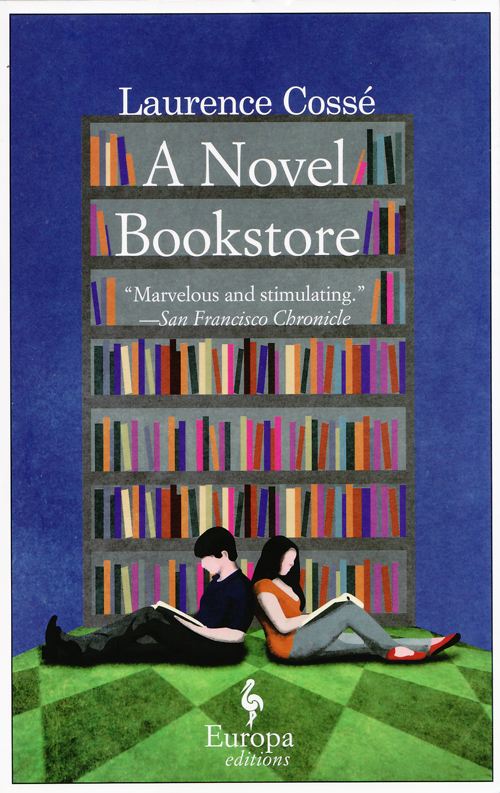
A Novel Bookstore

A Novel Bookstore
by Laurence Cossé
translated from French by Alison Anderson

Have you ever dreamed of opening a bookshop? Have you ever planned what it would be like, how it would be different from all those other bookshops? I can’t decide whether this book would encourage or discourage such an ambition but there’s definitely some wish-fulfilment going on.

The novel opens with a series of attacks on seemingly unconnected people. I don’t want to reveal too much, but the link is The Good Novel, a Paris bookshop opened by rich booklover Francesca and idealistic bookseller Ivan. They discover that they share the same dream of a bookshop that sells only great novels, and pour everything into making their dream a reality, but their shop strikes a nerve in French cultural circles and comes under increasingly severe attacks.

“If I spent my money restoring a Roman viaduct or any other masterwork of our heritage, everyone would think it was a very worthy cause. What we are doing is no different. We are investing our time and money to support and enrich our literary heritage, which is being threatened by forgetfulness and indifference, not to mention disarray in taste. Our cause is undeniable.”

I found that I couldn’t grasp the tone at first. And then just as I was getting the hang of it, there was an odd switch from crime drama to the idealistic story of setting up the dream bookshop. But it’s a surprisingly enjoyable read considering all the action is in the first three chapters.

At the core of the book is the debate between high and low culture. Francesca and Ivan have pinned their hopes on high culture: their choice of “great” novels is primarily classic or overlooked literary works. They opt out of the bestseller lists and new releases, which isn’t the most effective business model and isn’t entirely popular with publishers and other bookshops – it does admittedly smack of snobbery – but of course it’s the authors whose books aren’t chosen for sale at The Good Novel who express the most anger.

“The essential problem raised by the notion of literary value is that this value changes with time. A work that might have been hailed by its contemporaries seems trivial a hundred years later, perhaps even thirty years later. Inversely, another work that was judged unpleasant or uninteresting may now be praised to the skies.”

Personally, I’m torn which side I’m on. Not that I condone the attacks on The Good Novel. And I love heartfelt book recommendations, such as are at the core of Ivan’s bookselling style. But I think getting people reading is always a good thing, and those easy reads and bestsellers – they’re a big part of that process.

“Literature is a source of pleasure, he said, it is one of the rare inexhaustible joys in life, but it’s not only that. It must not be disassociated from reality…There are grown-ups who will say no, that literature is not life, that novels teach you nothing. They are wrong. Literature informs, instructs, it prepares you for life.”

This book is jam-packed with references to “great” books and you could make a very long recommended reading list from it, though how many of them would be available in English translation I don’t know. The other thing it has going for it is a sub-plot that’s a sweet realistic romance. I kept expecting darker things around the corner but this novel’s beauty is its simplicity.

“He had no more imaginary space, nowhere he could escape to, no more expectations, all he could do was make himself available to the present moment, to what was immeasurable, the terrible profusion of moments that make up a day.”

Au bon roman published 2009 by Editions Gallimard, Paris.
Translation published 2010 by Europa Editions.

Source: Won in a giveaway from Savidge Reads.

Challenges: This counts towards the 2013 TBR Pile Challenge.

Kate Gardner Reviews

Posts pagination

1 2

Archives

RSS Nose in a book

  • Book review: Interstellar Megachef by Lavanya Lakshminarayan
  • May 2026 reading round-up
  • Book review: Passing by Nella Larsen

Me on the internets

  • @kate_in_a_book@mas.to (Mastodon)
  • Flickr/noseinabook
  • Instagram/kate_in_a_book
  • StoryGraph/kate_in_a_book

Categories

  • Blog
  • Reviews
  • Uncategorized
Proudly powered by WordPress | Theme: Dream by vsFish.