Nose in a book

Reviews and other ramblings

  • Home
  • Reviews archive
    • Book reviews
    • TV reviews
    • Theatre reviews
  • TBR
  • Challenges
    • The Classics Club
    • 2014 Popular-Science Reading Challenge
    • Cookery challenge
    • The Gilmore Girls Reading Challenge
    • 2013 TBR Pile Challenge
    • 2013 Translation Challenge
    • Crime and Punishment read-a-long
  • About
    • Cookie legal stuff
  • Home
  • Reviews archive
    • Book reviews
    • TV reviews
    • Theatre reviews
  • TBR
  • Challenges
    • The Classics Club
    • 2014 Popular-Science Reading Challenge
    • Cookery challenge
    • The Gilmore Girls Reading Challenge
    • 2013 TBR Pile Challenge
    • 2013 Translation Challenge
    • Crime and Punishment read-a-long
  • About
    • Cookie legal stuff

Tag: society

Book review: Sex and Lies by Leïla Slimani
September 2, 2025February 16, 2026 1 Comment

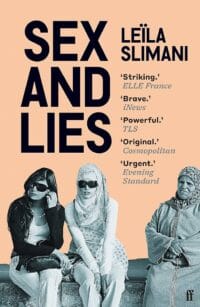
sex and lies book cover

I like essay collections but I tend to buy them at a faster rate than I read them. I fear they’re going to be less gripping than a novel or deal with serious subjects with less levity than fiction usually adds. Neither of which was a problem with Sex and Lies by Leïla Slimani (translated from French by Sophie Lewis).

I first heard about Slimani when her her novel Lullaby was published in English in 2018 and everyone was recommending it. I took one look at the synopsis and decided it was far too dark for me. That novel won Slimani the Prix Goncourt, making her the first Moroccan woman to do so. But it was actually her previous novel Adèle that triggered the conversations that led to Sex and Lies.

Adèle is about a woman living with sex addiction. When it came out in France, there was publicly expressed surprise that a Moroccan woman could have written on that topic, or indeed anything related to sex. Slimani didn’t set out to be shocking or controversial. She was after all following a centuries-old tradition of Arabic-authored literature that is frank about sex. But she acknowledges that in recent decades, things have changed on that front in her native country.

On her two-week Moroccan book tour for Adèle Slimani found that women and young people were keen to discuss sexual topics. But the conversations kept turning to the lack of freedom in modern Morocco. So she kept the conversations going, meeting people – mostly women – who were willing to be interviewed, albeit anonymously for the most part.

Continue reading “Book review: Sex and Lies by Leïla Slimani”
Kate Gardner Reviews

Book review: The God of Small Things by Arundhati Roy

June 20, 2023 1 Comment

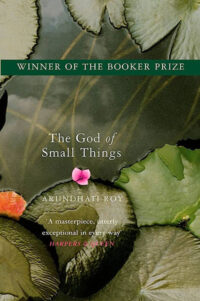
God of Small Things book cover

I have been hearing praise lavished on this novel since it was first published in the 1990s but somehow The God of Small Things by Arundhati Roy still exceeded my expectations. It goes to some tough, dark places but manages to use a playfulness with language to prevent it from being a tough, dark read.

That same playfulness with language also means that the story initially feels elusive, at a distance, even though most of the facts are given to the reader up front. We start with a 31-year-old woman, Rahel, arriving at her childhood home in Kerala after a long absence. She has come because her twin brother Esthappen has also come back. The only other family member living there now is their aunt Baby Kochamma.

We learn early on that something terrible happened when the twins were 7 and that they haven’t seen each other since. Some of the major details are revealed in the first few pages, while other details are saved to almost the final page. It involved their English cousin Sophie, their mother Ammu, the local Communist leader Comrade Pillai and a local man called Velutha who worked in the family’s pickle factory.

Switching between 1969 and 1993, Roy gradually reveals the facts but she also builds the characters piece by piece. When new details are revealed about a character, that becomes another way to refer to them. For instance, 7-year-old Rahel wears her hair “on top of her head like a fountain” in a “Love-in-Tokyo” hair band, and from then on is sometimes simply referred to as “the fountain” or “Love-in-Tokyo”. This is occasionally confusing but for the most part works well to give something like a child’s point of view to the 1969 sections.

Continue reading “Book review: The God of Small Things by Arundhati Roy”

Kate Gardner Reviews

That summed up the whole mess: heartburn

June 12, 2018

heartburnHeartburn
by Nora Ephron

Man, Nora Ephron was funny. Sadly this was her only novel, but as it is the thinnest veneer of fiction over autobiography, I guess it’s not so far from her brilliant essays. This beautiful new edition from Virago Modern Classics was the centrepiece of a Waterstones window display and tempted me into the shop to buy a copy, then also led me to buy three other books because, you know, I was in a bookshop.

It’s the story of Rachel who, seven months pregnant with her second child, discovers that her husband is not only cheating on her, but has fallen in love with the other woman. She must now figure how to move on with her life while protecting her toddler son Sam. And she has to reassess her marriage to Mark, which turns out to have been on rocky ground from the very start.

“When Mark and I married we were rich and two years later we were broke. Not actually broke – we did have equity. We had a stereo system that had eaten thousands of dollars, and a country house in West Virginia that had eaten tens of thousands of dollars, and a city house in Washington that had eaten hundreds of thousands of dollars, and we had things – God, did we have things…now, of course, I understand it all a little better, because the other thing that ate our money was the affair with Thelma Rice. Thelma went to France in the middle of it, and you should see the phone bills.”

Continue reading “That summed up the whole mess: heartburn”

Kate Gardner Reviews

Love…it means too much to me

February 18, 2018

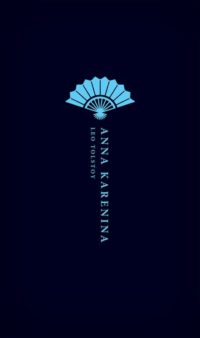
Anna KareninaAnna Karenina
by Leo Tolstoy
translated from Russian by Rosamund Bartlett

Phew, I made it to the end! This is a big book and it took me a month to read. But it wasn’t a slog. I found Tolstoy’s writing much more accessible than Dostoevsky or Dickens, his contemporaries.

I had a rough idea of the story before I started this book, but hadn’t realised that the story of Anna is not the only plotline. As its famous opening line suggests, the novel follows a few interlinked families, and Anna is not the focus of the first nor the last chapter. We open in Moscow with her brother, Stepan Arkadyevich Oblonsky, who is in trouble with his wife, Princess Darya Alexandrovna Oblonskaya (Dolly), after cheating on her with the nanny. Only the arrival of Anna from St Petersburg manages to calm the household down.

At the same time, Oblonsky’s close friend Konstantin Dmitrievich Levin has come to Moscow to propose to Dolly’s younger sister, Ekaterina Alexandrovna Shcherbatskaya (Kitty), but unfortunately while he has been away at his country estate, Kitty has taken up a flirtation with Count Alexei Kirillovich Vronsky, a dandy young cavalry officer from St Petersburg. In confusion between her two suitors, she turns Levin down. But just a few days later, at a society ball, Vronsky meets Anna and their mutual attraction is immediately obvious to all.

“It was as if tears were the essential lubricant without which the machinery of mutual relations between the two sisters could not operate effectively – after the tears the sisters did not talk about what preoccupied them, but they understood each other even though they were talking about other things. Kitty understood that she had deeply wounded her poor sister with those words she had uttered in a fit of pique…but that she was forgiven. For her part, Dolly understood all that she had wanted to know.”

Continue reading “Love…it means too much to me”

Kate Gardner Reviews

We were always going toward something terrible that had existed before us

August 11, 2015

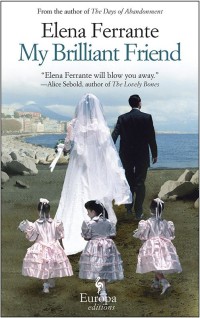
my-brilliant-friendMy Brilliant Friend
by Elena Ferrante
translated from Italian by Ann Goldstein

I had read conflicting reviews of this book, so I’d put it to one side for a while. But then along came the Books on the Nightstand Summer Bingo, with that classic square “A random book from a shelf”. So I stood in front of the TBR shelves, closed my eyes, waved my hand around, and lo and behold this was what I picked out.

The framework is the story of two girls’ friendship in Naples in the 1950s, but through Elena and Lila we really get to know a whole neighbourhood and all the minutiae of money, class, society and education that will affect the lives of everyone born there.

To begin with Elena and Lila are not all that different. Elena, who narrates the story, is the daughter of a porter at the city hall, while Lila is daughter of a shoemaker. Elena admires Lila from a young age and so wants to be her friend that she hangs around nearby, playing with her doll at the same street corner, until Lila has tested her bravery enough times to form a lasting bond.

“Up or down, it seemed to us that we were always going toward something terrible that had existed before us yet had always been waiting for us, just for us…Adults, waiting for tomorrow, move in a present behind which is yesterday or the day before yesterday or at most last week: they don’t want to think about the rest. Children don’t know the meaning of yesterday, of the day before yesterday, or even of tomorrow, everything is this, now: the street is this, the doorway is this, the stairs are this.”

Continue reading “We were always going toward something terrible that had existed before us”

Kate Gardner Reviews

To really see the state of things is lethal

August 2, 2015August 2, 2015

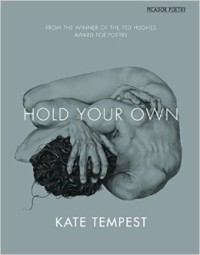
hold your ownHold Your Own
by Kate Tempest

I bought this poetry collection when I went to see Kate Tempest as part of the Bath Festival of Literature, and like her live performance, the book is inspiring.

Tempest’s words fizz with righteous anger and passion, but they are also highly intelligent, filled with classical references and political insight.

Just take this collection’s premise. It centres on the myth of Tiresias, who as a young man disturbs a pair of copulating snakes and is punished by the goddess Hera, who turns him into a woman. Years later, she is “allowed” to return to the form of man, but then another encounter with the gods leaves him a blind clairvoyant. Tempest takes this story apart into four chapters – childhood, manhood, womanhood and blind profit (see what she did there?!) – each of which is a sequence of poems about Tiresias and the myth’s parallels to modern society and her own life. This gives her a natural route to discussions of gender, sex and relationships, but also poverty, community, age, politics and the future.

Continue reading “To really see the state of things is lethal”

Kate Gardner Reviews

The story of a poor man’s life is written on his body, in a sharp pen

August 16, 2013August 16, 2013 3 Comments

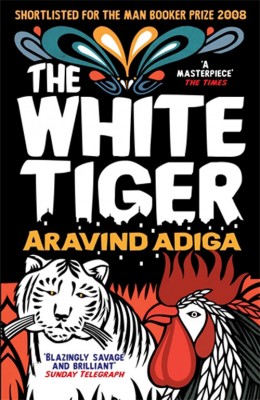
The White Tiger

The White Tiger
by Aravind Adiga

This book looked like a fun read that would be something a bit different, and that’s pretty much exactly what it was. I enjoyed it greatly but in the week since I finished it, it hasn’t really stayed with me.

The style is initially surprising and unusual. The story is written in the form of letters addressed to Chinese premier Wen Jiabao from Balram Halwai, a self-proclaimed entrepreneur from a very poor background. Balram wants to tell his life story, beginning with how he got the nickname White Tiger and up to how he is wanted by the police. Through this device, Adiga exposes the state of India, or his opinion of the state of India, at any rate. And it’s not a particularly favourable opinion.

“It is an ancient and venerated custom of people in my country to start a story by praying to a Higher Power. I guess, Your Excellency, that I too should start off by kissing some god’s arse. Which god’s arse, though? There are so many choices. See, the Muslims have one god. The Christians have three gods. And we Hindus have 36,000,000 gods…Bear with me, Mr Jiabao. This could take a while. How quickly do you think you could kiss 36,000,004 arses?”

This was my pick for book club and from our discussion it looks like I thought there was more to it than the others did. There was a general feeling that the characters were a bit thin, and the overall tale a bit preachy and lacking in shades of grey (though I should note everyone found it funny and enjoyable). I must say I didn’t find it preachy but I’ll allow that it definitely had a message about class and poverty in India. And it’s certainly not subtle either – the humour is savage and the reality that is revealed is shocking.

Balram has a theory that the poor in India are in a chicken coop. Most of them accept this and stay within the bounds of the coop, but those who do try to escape are quickly shoved back in their place. It takes something extraordinary for anyone to escape the coop. He of course is one of the extraordinary (the only escapee we meet in this tale) but he freely accepts that the method he employed to escape is extreme.

“A rich man’s body is like a premium cotton pillow, white and soft and blank. Ours are different. My father’s spine was a knotted rope…cuts and nicks and scars, like little whip marks in his flesh, ran down his chest and waist, reaching down below his hipbones into his buttocks. The story of a poor man’s life is written on his body, in a sharp pen.”

Balram is a genuinely funny narrator. Since being told that he is as rare as a white tiger when he was the smartest kid in school, he has had ideas above his station. He’s also selfish, objecting to his grandmother’s repeated requests that he share his earnings with his family. He talks through his life, from working in a tea shop in a small village, to being a rich man’s driver in Delhi, to being a businessman in Bangalore. He reveals early on that he has done something shocking, so that most of the book is the answer to the question why and how.

“In the belief that the future of the world lies with the yellow man and the brown man now that our erstwhile master, the white-skinned man, has wasted himself through buggery, mobile phone usage and drug abuse, I offer to tell you, free of charge, the truth about Bangalore.”

This is not a book for those who want a subtle exploration of how modern India operates, or if you want a wide-reaching study of Indian society. It is a funny, easy-to-read, fast-paced window opened just a crack onto a version of reality. I genuinely enjoyed it and even learned a few things but I can’t say that it changed my view of the world or stunned me with its language. Not every book can do that.

Published 2008 by Atlantic Books.
Winner of the 2008 Booker Prize.

Source: A book swap.

Challenges: This counts towards the 2013 TBR Pile Challenge

Kate Gardner Reviews

Man is many things, but he is not rational

January 15, 2013January 23, 2013 2 Comments

The Picture of Dorian Gray
by Oscar Wilde

I have had this sat on my shelves for ages because, even though I’ve watched and loved a few of Wilde’s plays and have fond memories of his children’s stories, something in me said this is old and “classic”, therefore it will be hard. It was not a hard read at all, it was a thoroughly enjoyable one.

I would say that everyone already knows the storyline, but I was surprised to discover how vague my understanding of it was before I started reading. So I will summarise. At the start of the novel, Dorian Gray is young, beautiful, charming and innocent, and is serving as a muse to painter Basil Hallward, who is a little obsessed with him and has just painted his masterpiece, a portrait of Dorian. Dorian remarks that he wishes the painting might grow old while he stays young and beautiful and…well, it happens, but more slowly and darkly than I had expected.

“Hour by hour, and week by week, the thing upon the canvas was growing old…The cheeks would become hollow or flaccid. Yellow crow’s feet would creep round the fading eyes and make them horrible. The hair would lose its brightness, the mouth would gape or droop, would be foolish or gross, as the mouths of old men are. There would be the wrinkled throat, the cold, blue-veined hands, the twisted body.”

Dorian, when he realises what is happening, slowly becomes quite bad. Is this the influence of life in general? The circumstance of being able to look fresh and beautiful no matter how guilty he feels? Is it how Dorian’s nature was always fated to develop? Or is it all the influence of Lord Henry Wotton, a friend he was introduced to by Basil on that fateful day when the portrait was finished? Lord Henry is a fun character, talking largely in aphorisms and painting himself as morally repugnant, but the key seems to be that he doesn’t mean half of what he says, whereas Dorian takes it all to heart.

” ‘I adore simple pleasures,’ said Lord Henry. ‘They are the last refuge of the complex. But I don’t like scenes, except on the stage…I wonder who it was defined man as a rational animal. It was the most premature definition ever given. Man is many things, but he is not rational. I am glad he is not, after all.’ “

This book is so very quotable. Even skipping the slightly trite aphoristic preface (which I have seen quoted from many times), the language is full of both delightfully Wildean phrases but also exquisite descriptions:

“There was a silence. The evening darkened in the room. Noiselessly, and with silver feet, the shadows crept in from the garden. The colours faded wearily out of things.”

The characters are interesting. I didn’t feel I ever got to know any of them well, but they are certainly varied and in some cases fascinatingly complex. Even those characters that might have been verging on caricature are described so well it hardly matters.

“The exaggerated folly of the threat, the passionate gesture that accompanied it, the mad melodramatic words, made life seem more vivid to her. She was familiar with the atmosphere. She breathed more freely, and…would have liked to have continued the scene on the same emotional scale, but he cut her short. Trunks had to be carried down, and mufflers looked for. The lodging house drudge bustled in and out. There was the bargaining with the cabman. The moment was lost in vulgar details.”

Nothing is straightforward and not all of the mysteries of the story are resolved. Which was sometimes frustrating – exactly what are the rumours circulating about Dorian? I can imagine, but I want to know! I suppose that’s one of the moments to remember that this was written in the 19th century – it rarely if ever feels that old.

First published in the July 1890 issue of Lippincott’s Monthly Magazine. Revised and published as a book in 1891 by Ward, Lock and Company.

Source: I have a chunky Complete Works of Oscar Wilde that I have owned for more than 10 years. I think I bought it for myself. Probably.

Challenges: This counts towards the Rory Gilmore Reading Challenge.

Kate Gardner Reviews

All that succession and repetition of massed humanity

August 23, 2012September 10, 2012 4 Comments

Vile Bodies
by Evelyn Waugh

Why oh why have I never read Waugh before? How has this happened? He was clever and funny and acerbic and fun and catty. Can you tell I enjoyed this book?

The novel follows a short time in the lives of the “bright young things”, the high, fast-paced society of 1920s London. From the first page the caustic comic tone is set. No-one escapes a vicious lashing. There are no real heroes, though a case might be made for Adam Fenwick-Symes being the centrepiece. He is certainly the butt of the longest joke: his relationship with lovely but frankly flighty Nina.

The story is really a series of parties and other social engagements. As Adam remarks at one point:

“…’Oh, Nina, what a lot of parties.‘
(Masked parties, Savage parties, Russian parties, Circus parties…parties in flats and studios and houses and ships and hotels and nightclubs, in windmills and swimming baths…all that succession and repetition of massed humanity. Those vile bodies…)”

For all the wit and the lack of getting inside anyone’s head, the characters are not entirely caricatures. There is an element of that certainly, but there are complexities too. When at one point Adam encounters a dressmaker’s dummy, the narration adds:

“…there had been one of these in Adam’s home which they used to call ‘Jemima’ – one day he stabbed ‘Jemima’ with a chisel and scattered stuffing over the nursery floor and was punished. A more enlightened age would have seen a complex in this action and worried accordingly…”

While the goings-on are quite lighthearted and romping, there is the occasional event that you feel ought to be being taken more seriously. But then when I got to the ironically titled final chapter “Happy ending”, I realised that that was the whole point. Without wishing to give anything away, Waugh neatly provides the excuse for all this living to excess, while maintaining his pessimistic tone.

The satire of society does come at a price. Emotion is limited or absent completely, despite the central love story of Adam and Nina, not to mention some other serious goings-on that might demand an emotional response. And politicians are present and roundly mocked but their politics not dealt with at all. I suppose it is quite a small book and to keep its momentum it had to have a narrow focus.

One subject that does muscle its way into the narrative is tabloid journalism, in particular the gossip columns. This was handled so amusingly that I particularly want to read Waugh’s novel Scoop soon.

First published 1930 by Chapman & Hall.

Kate Gardner Reviews

Archives

RSS Nose in a book

  • Book review: Interstellar Megachef by Lavanya Lakshminarayan
  • May 2026 reading round-up
  • Book review: Passing by Nella Larsen

Me on the internets

  • @kate_in_a_book@mas.to (Mastodon)
  • Flickr/noseinabook
  • Instagram/kate_in_a_book
  • StoryGraph/kate_in_a_book

Categories

  • Blog
  • Reviews
  • Uncategorized
Proudly powered by WordPress | Theme: Dream by vsFish.